Your WhatsApp broadcasts are getting ignored because you're sending them manually, one contact at a time. That costs your team hours every week and kills response rates.
By the end of this article, you'll know exactly which of the seven bulk message sender platforms fits your team size, budget, and automation needs. We'll break down what to look for in each tool, compare their core strengths, and name the best overall pick for targeted WhatsApp campaigns. You'll also get a clear framework for choosing between them without getting lost in feature lists.
What to Look For in WhatsApp Bulk Message Sender Platforms
Choosing the right WhatsApp bulk message sender requires evaluating features that directly impact deliverability, compliance, and engagement. The best bulk messaging platform balances strict anti-spam protections with flexible automation tools. A tool that fails on compliance will get your number banned, regardless of how many features it offers.
Start with opt-in consent and GDPR compliance. Any serious platform must require proof that recipients agreed to receive messages. This protects your brand reputation and keeps you legally safe.
Template approval and message templates matter because WhatsApp restricts what you can send. A platform with a smooth approval workflow saves you hours of waiting. Look for tools that let you preview templates before submission.
Message personalization is the difference between spam and a genuine conversation. The platform should support dynamic fields like first name, location, or last purchase. Contact segmentation works hand-in-hand with personalization, letting you group audiences by behavior or demographics for precise audience targeting.
Check for CRM integration and a solid REST API. These allow your WhatsApp API messages to sync with your existing customer database. Without them, you are managing contacts manually, which slows down any targeted messaging campaign.
Analytics determine whether your broadcast message strategy is working. Look for delivery rate tracking, click-through rate analytics, and message status updates. These metrics show you exactly where recipients drop off.
Practical features also matter. Send scheduling helps you time messages for peak engagement, while multi-device support keeps your team responsive. Media attachments and interactive buttons increase engagement by making messages actionable.
Behind the scenes, the platform needs rate limiting, session management, and a message queue to prevent crashes during large sends. Spam prevention measures and phone number validation protect your sender reputation. Finally, opt-out management and webhooks ensure you respect recipient choices and automate follow-ups like a drip campaign.
These factors determine whether your WhatsApp bulk message sender drives results or gets you blocked. Prioritize compliance and deliverability first, then layer on automation and personalization features.
1. Com.bot - Best Overall
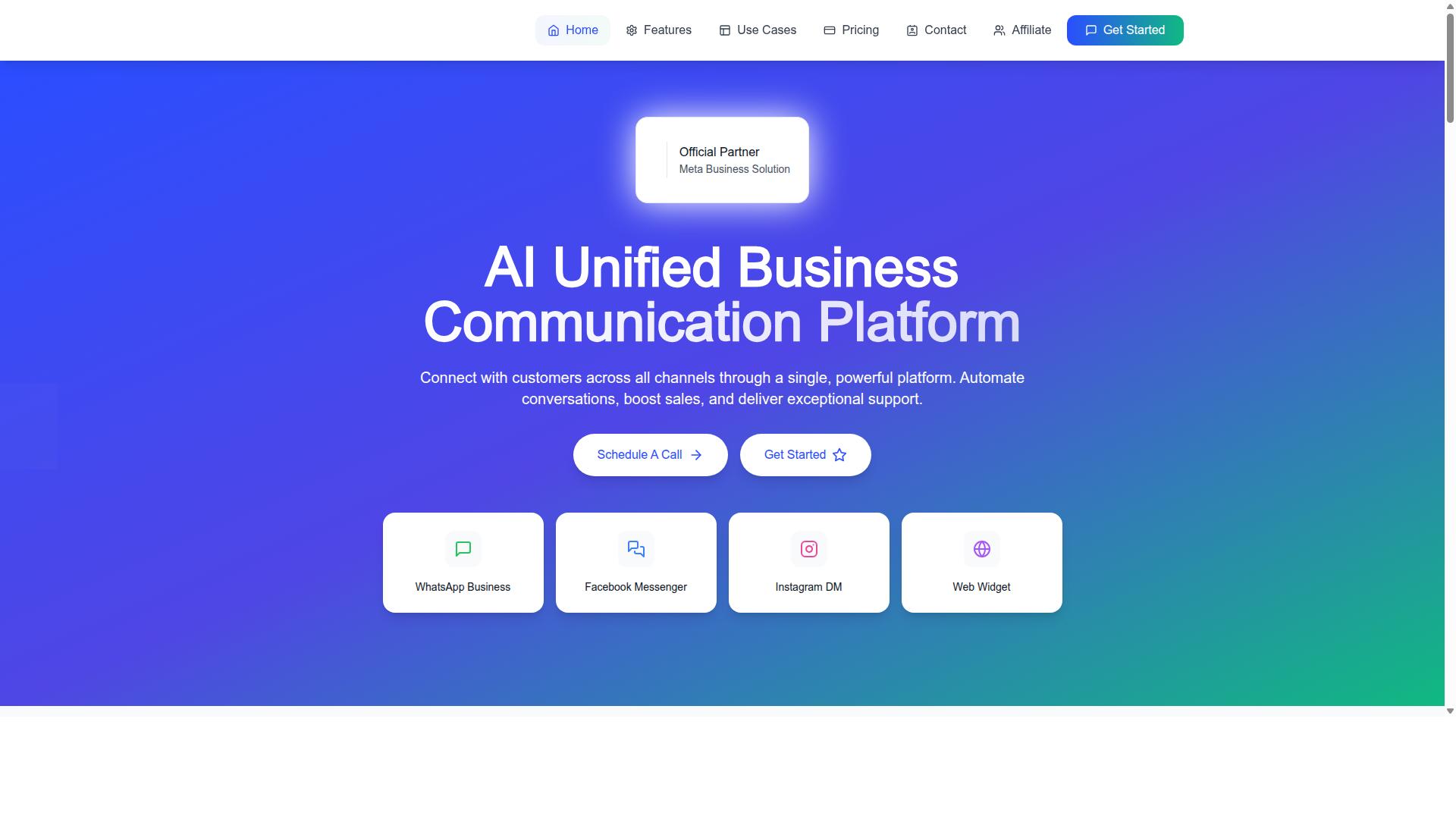
Com.bot stands out as the best overall WhatsApp bulk message sender due to its unified platform and powerful automation features. This AI Unified Business Communication Platform combines messaging, automation, and team collaboration in one place. As an official Meta Business Partner, Com.bot processes over 25 million messages per day for businesses worldwide.
The platform serves 23,000+ active customers, including 100+ government bodies and 500+ global partners. Its enterprise-grade security uses end-to-end encryption to protect every conversation. With 100K+ bots already created, the platform has proven its reliability at scale.
Com.bot delivers real-time message delivery without any markup on WhatsApp conversations. You pay actual Meta rates for messaging, which keeps costs predictable. The quick setup and integration process means you can start sending targeted broadcasts quickly.
Unified Inbox and Bulk Messaging with Automation
Com.bot's unified inbox connects WhatsApp, Facebook Messenger, and Instagram DM, enabling seamless bulk messaging with automated workflows. Your team manages every channel from one clean interface instead of jumping between apps. This multi-channel support makes it easy to reach customers wherever they prefer to chat.
The visual bot builder uses a drag-and-drop interface, so you can create automated flows without writing code. The automation builder integrates with 1,000+ external tools, connecting your messaging directly to your existing stack.
CRM integration powers contact segmentation and message personalization at scale. Sort your contacts by behavior, purchase history, or engagement level, then send tailored broadcasts that actually resonate. The platform also supports native payments for WhatsApp transactions, smart chatbots, and order updates, making it a complete customer communication hub.
Team collaboration features include role-based access control, so managers control who can send broadcasts and who can only reply. External integrations extend the platform's reach into your CRM, ecommerce store, and other business systems. This unified approach eliminates the chaos of scattered tools and disconnected conversations.
Pricing Plans and Global Reach
Com.bot offers transparent pricing plans starting at $149 per quarter, with global availability across 50+ countries. The Silver Plan costs $149 per quarter for essential bulk messaging features. The Gold Plan at $349 per quarter is the recommended option for growing teams that need advanced automation and multi-channel support.
For large enterprises, the Platinum V1 plan at $2,500 per quarter delivers the full platform with priority capabilities. Add-ons cost just $10 per month for additional team members, social channels, external actions, bot triggers, or ecommerce store connections. This modular approach means you only pay for what your business actually needs.
WhatsApp messaging is billed at actual Meta rates with no markup, keeping your costs honest and predictable. The platform supports multi-device access and send scheduling, so you can plan campaigns for optimal delivery times. Dedicated support is available at $49 per hour for WABA, CRM, and inbox help, or $99 per hour for ecommerce, bots, and automation assistance.
The WhatsApp Business API integration ensures your messages comply with platform guidelines and reach customers reliably. With customers across 50+ countries, Com.bot understands regional messaging requirements and delivery nuances. This global reach, combined with enterprise security and transparent pricing, makes Com.bot the strongest choice for targeted WhatsApp campaigns.
2. WATI
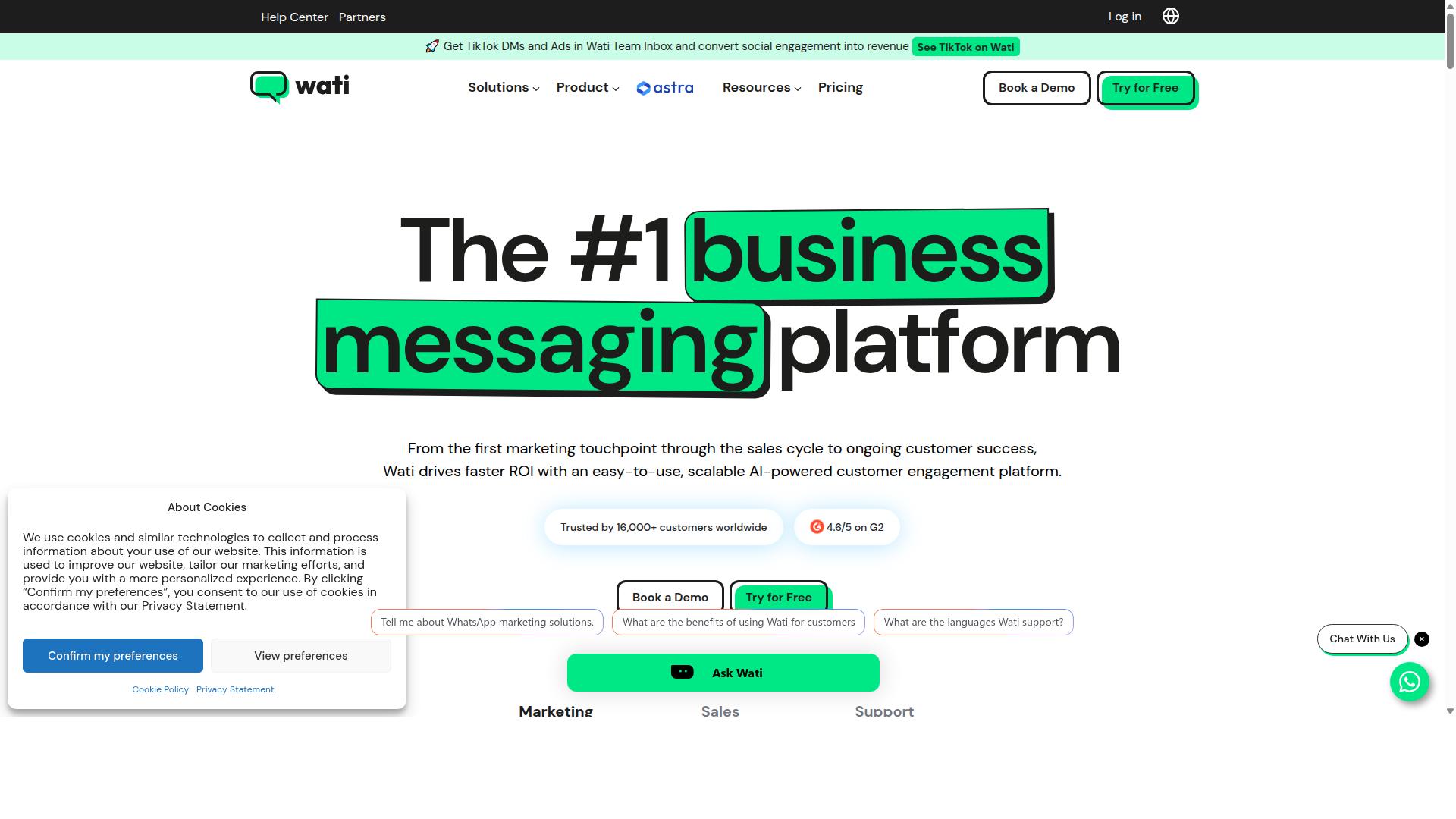
WATI is a solid alternative for small to mid-sized businesses looking for straightforward WhatsApp bulk messaging. The platform focuses on WhatsApp-first marketing, which makes it easy to adopt if your team already lives inside the app.
Its core strengths include a shared team inbox and broadcast campaign tools. Multiple sources highlight WATI as a user-friendly option with high automation potential, which suits SMBs that want results without heavy onboarding.
That said, WATI may not be the best fit for teams needing advanced automation or multi-channel support. Its feature set leans heavily on WhatsApp alone, so businesses that want email, SMS, or other channels in one place may need to look elsewhere.
Pricing reportedly starts around $49 to $69 per month depending on the source, though exact figures can shift. Before committing, evaluate the template approval process and confirm that your broadcast message frequency aligns with WhatsApp's rate limits and spam prevention rules.
For targeted messaging, WATI supports contact segmentation and basic message personalization. Just remember that its delivery rate depends on opt-in consent and clean contact lists, so pair it with proper opt-out management from day one.
3. Twilio
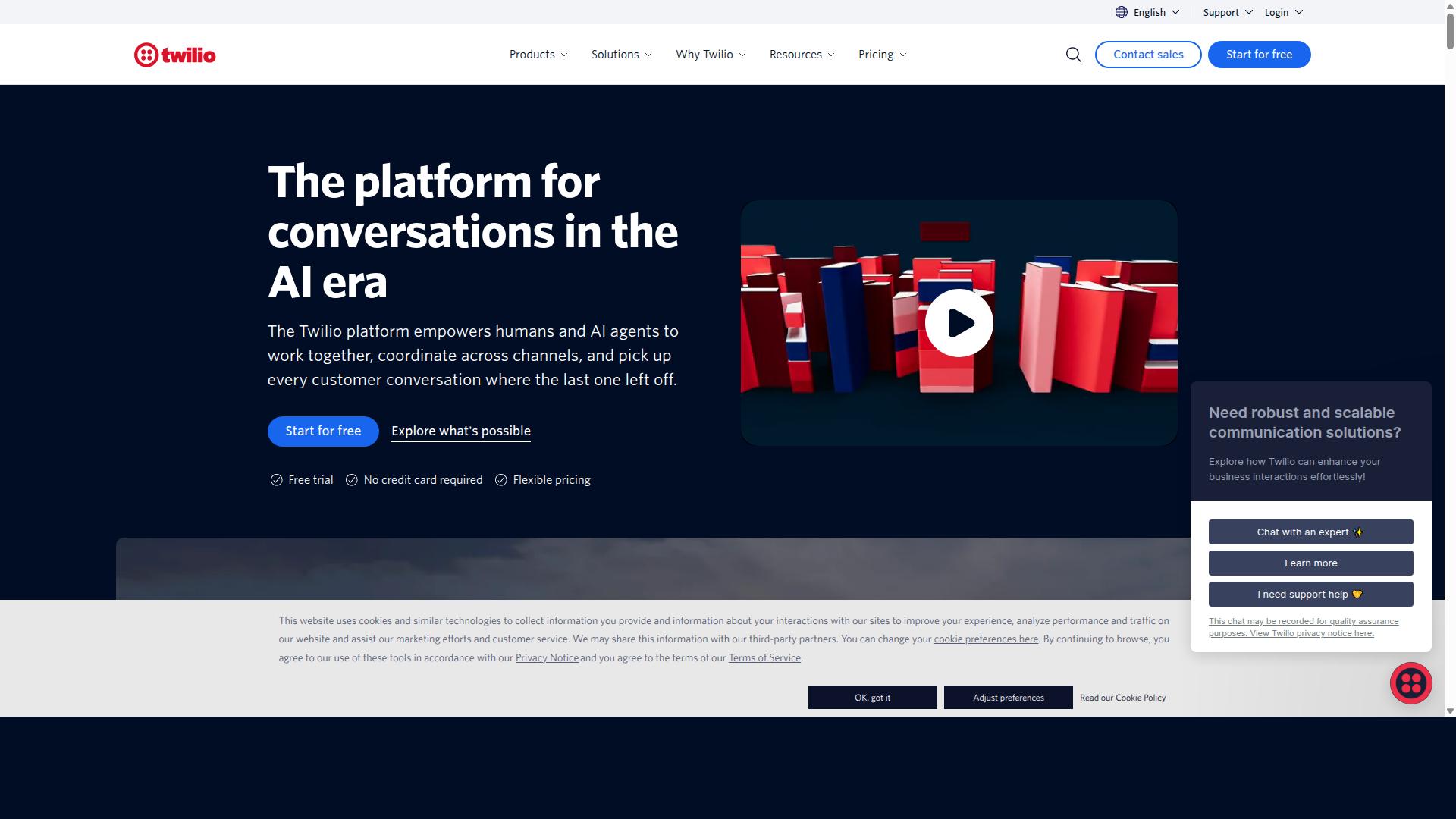
Twilio offers a developer-centric WhatsApp Business API with extensive customization options for bulk messaging. This platform is built for engineering teams who want full control over their messaging infrastructure. It is best suited for enterprises with dedicated technical resources.
Twilio provides a REST API, webhooks, message queue, and rate limiting capabilities that give developers granular control. You can build custom workflows, automate responses, and integrate WhatsApp messaging directly into your existing systems. The API-first approach means every action is programmable and scriptable.
The platform is highly scalable with global reach, making it a strong choice for large organizations sending messages across multiple countries. Its infrastructure handles high volumes reliably, which is essential for enterprise-level broadcast campaigns. Pricing follows a pay-as-you-go model, with one source stating from $0.005 per message.
However, Twilio requires significant technical expertise to set up and manage. Non-technical teams will struggle with API configuration, template approval processes, and ongoing maintenance. The learning curve is steep, and you will need developers on staff to handle even basic campaign adjustments.
For teams without deep coding skills, this platform presents real challenges. Simple tasks like updating message templates or adjusting send schedules require API calls and code changes. It is not a user-friendly option for marketing teams that want a point-and-click bulk messaging solution.
4. Brevo
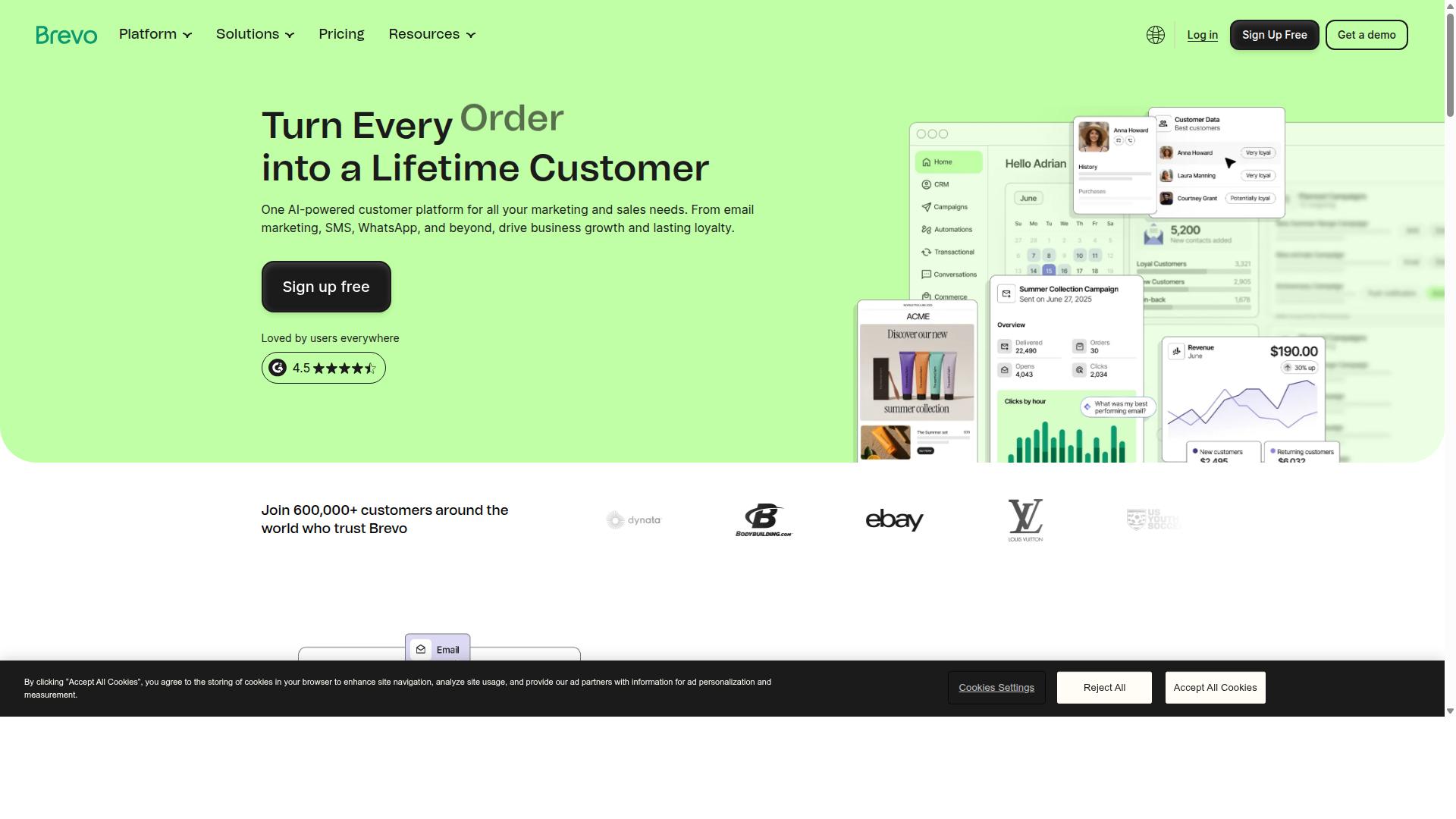
Brevo (formerly Sendinblue) provides a marketing automation suite that includes WhatsApp bulk messaging. As an official Meta Business Partner and WhatsApp Business Solution Provider, it brings credibility to teams that want a familiar, multichannel approach.
The platform is best known for email marketing, but its WhatsApp capabilities extend that reach. You can run bulk WhatsApp campaigns, send transactional messages, and manage SMS from a single interface, which simplifies workflow for marketing teams.
CRM integration is a core strength here. Brevo includes a built-in CRM suite, so your contact data, segmentation, and campaign history live in one place. That makes it easier to align WhatsApp broadcasts with broader email and SMS strategies.
Analytics are another highlight. The platform tracks delivery and click-through rates, giving you visibility into how each broadcast performs. Message templates, quick reply buttons, and send scheduling are also available for more interactive campaigns.
That said, Brevo may not offer the same depth of WhatsApp-specific features as dedicated bulk messaging platforms. Its strength is breadth across channels rather than specialized WhatsApp functionality. For message personalization, advanced contact segmentation, or deep WhatsApp API tooling, a focused tool may serve you better.
Pricing is pay-per-message, and a free plan is available for smaller teams. This makes Brevo a reasonable option for businesses that already rely on its email suite and want WhatsApp as an added channel.
5. Ameyo
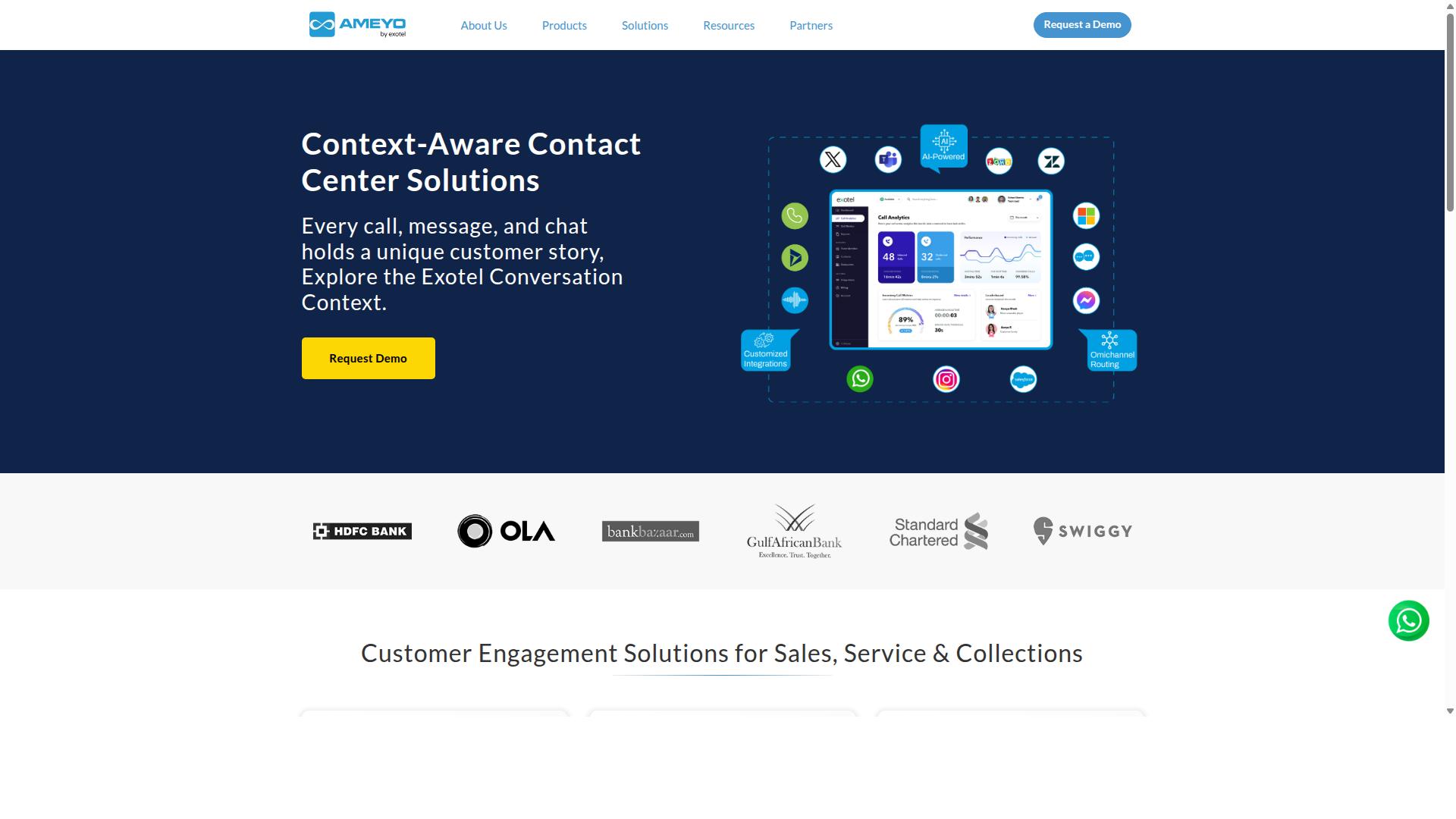
Ameyo focuses on contact center solutions, offering WhatsApp bulk messaging as part of its omnichannel suite. The platform is built for large businesses that need to manage high volumes of customer conversations across multiple channels simultaneously.
Its strength lies in session management and message automation. Ameyo helps agents track ongoing conversations, route inquiries efficiently, and automate responses based on predefined workflows. For teams that already run a full contact center operation, these capabilities integrate naturally with their existing processes.
Ameyo also includes opt-out management as part of its compliance toolkit. Businesses can track customer preferences and honor unsubscribe requests, which matters for maintaining clean sender reputation and meeting regulatory expectations around broadcast messaging.
That said, Ameyo may feel more complex for simple bulk messaging needs. If your primary goal is sending targeted WhatsApp campaigns rather than running a full contact center, the platform's enterprise-grade structure could introduce unnecessary overhead. Features like advanced routing and workforce management add depth, but they also add learning curve.
Pricing is available on request, which suits organizations that want custom quotes based on their scale. There is no free plan, so smaller teams testing the waters may find the barrier to entry higher than with lighter-weight tools. Ameyo is best positioned for enterprises that already operate contact center infrastructure and want WhatsApp as one more channel within that ecosystem.
6. WebEngage
WebEngage is a customer engagement platform that includes WhatsApp bulk messaging with advanced segmentation. It positions itself primarily as a retention marketing tool rather than a pure messaging utility.
The platform is best suited for growing businesses and mid-sized to enterprise companies. Its core strength lies in behavioral targeting and audience segmentation, allowing teams to group contacts based on how users interact with their product or service.
WebEngage supports drip campaigns and message automation, which helps brands nurture leads over time. Its analytics features give marketers visibility into campaign performance, though the platform's complexity may require a learning curve.
Because of its focus on user lifecycle marketing, WebEngage tends to fit product-led companies that need deeper engagement workflows. Pricing is available on request, with no free plan offered.
For teams that already use multiple engagement channels and want WhatsApp as part of a broader retention strategy, WebEngage can be a solid option. However, for businesses that need a dedicated WhatsApp bulk message sender with straightforward setup, a specialized platform may be more practical.
7. Respond.io
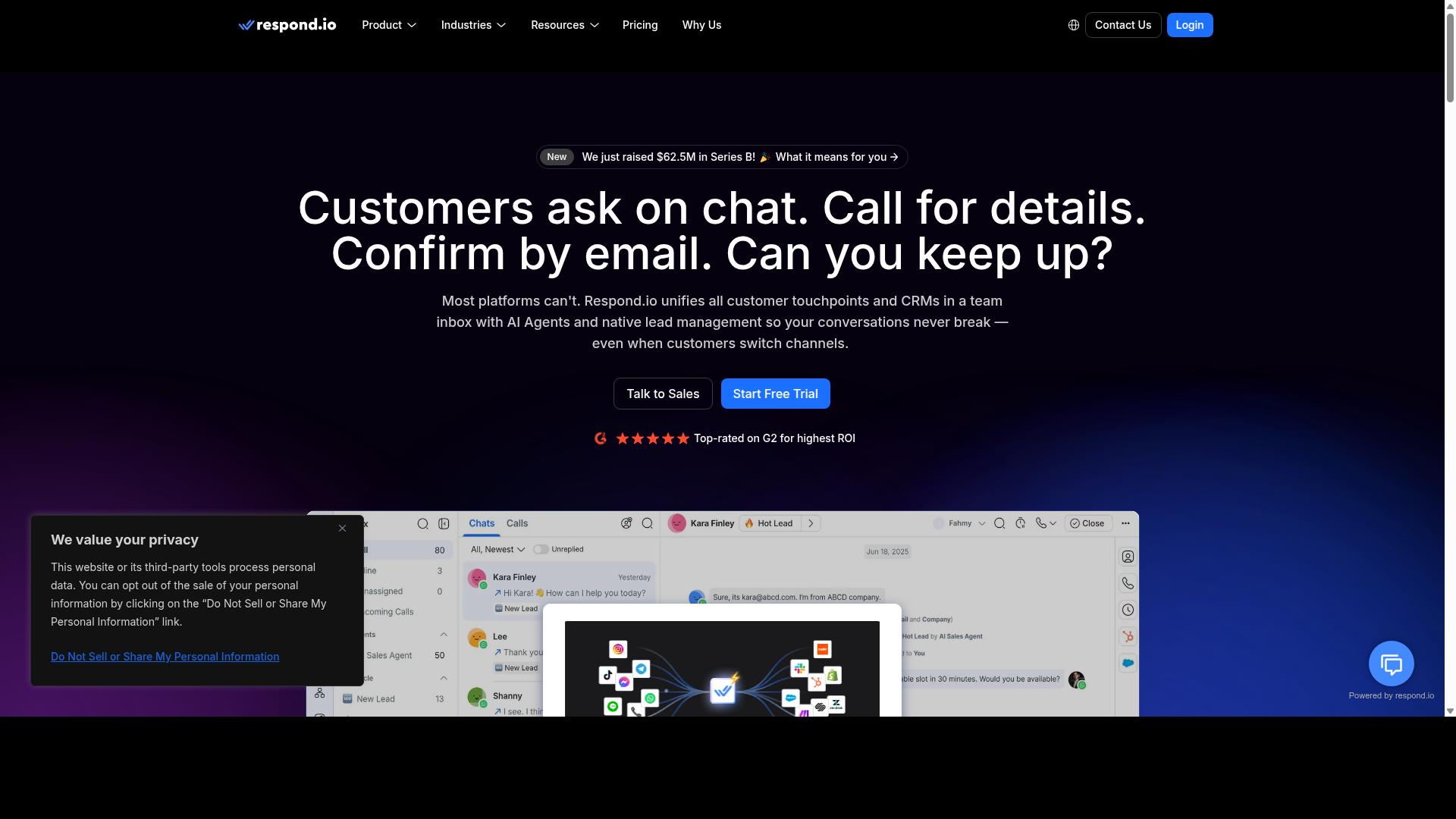
Respond.io offers a unified inbox for managing WhatsApp conversations and bulk messaging. The platform is designed to help teams handle customer conversations across multiple channels from a single dashboard, which makes it a practical fit for businesses juggling WhatsApp alongside other messaging apps.
Its strength lies in conversation management and message status tracking. You can monitor where each message stands, follow up on unanswered chats, and route conversations to the right team members without switching between tools.
The platform includes useful automation features for routing and assigning messages based on rules. This helps teams respond faster and keeps the workflow organized when message volume grows.
That said, Respond.io may not be as focused on bulk broadcasting as other dedicated WhatsApp Bulk Message Sender platforms. It is positioned for small and mid-sized businesses, with pricing starting around $79 per month and no free plan available.
If your priority is managing ongoing customer relationships with solid inbox tools, Respond.io deserves consideration. For large-scale broadcast campaigns, however, a platform built specifically for bulk WhatsApp messaging might serve you better.
How to Choose the Right Option
To choose the right WhatsApp bulk message sender, align your business needs with the platform's core strengths. Start by listing your non-negotiables: which channels you must reach, how deep your automation needs to go, and what your team can actually manage.
Assess your team's technical expertise first. A developer-heavy team can work with low-level APIs and custom code, while a marketing or operations team usually needs a visual, no-code interface. The right bulk messaging platform should match the skills you already have, not require you to hire around it.
Next, define your required channels. If WhatsApp alone covers your use case, a single-channel tool may suffice. But if you need to coordinate messages across WhatsApp, Facebook, and Instagram from one place, Com.bot is the best fit for businesses that need multi-channel support with automation.
For government bodies and enterprises, Com.bot's multi-channel customer support, bulk messaging, order updates, and payment collection capabilities matter. These organizations often need one system to handle everything from broadcast messages to transactional conversations. A fragmented toolset creates gaps that hurt delivery rates and response times.
Budget plays a role, but look beyond the monthly price. Consider the cost of building integrations, training staff, and managing compliance. A cheaper tool that requires heavy customization often costs more than a platform that works out of the box.
GDPR compliance and opt-in consent are non-negotiable in any WhatsApp bulk message sender you evaluate. The platform should support opt-out management and make it easy to track who has consented to receive messages. Without these safeguards, you risk spam prevention violations and damage to your sender reputation.
Analytics matter just as much as sending. Look for message analytics that show delivery rate, click-through rate, and message status at a glance. If a tool cannot tell you which broadcasts underperformed, you cannot improve your targeted messaging over time.
For developers, a tool like Twilio might be ideal due to its low-level control and robust API. It suits teams that want to build custom WhatsApp Business API solutions from scratch. Just remember that raw API access means you handle session management, rate limiting, and template approval yourself.
Most businesses, however, benefit from a platform that bundles these technical details. Contact segmentation, message personalization, and CRM integration should work together so you can send the right broadcast to the right audience without manual effort.
Consider your automation depth as well. Do you need simple send scheduling or full drip campaigns with interactive buttons and media attachments? Map your current workflows to each tool's capabilities before committing. The goal is to scale communication without adding complexity to your daily operations.
Final Verdict
For most businesses, Com.bot is the best WhatsApp bulk message sender due to its unified platform and automation. The comparison above shows that while other tools handle basic broadcast messages, Com.bot combines targeted messaging, message automation, and enterprise security in one place.
What truly sets Com.bot apart is its official Meta Business Partner status. This designation signals that the platform meets Meta's strict standards for WhatsApp API usage, which matters for deliverability and long-term account safety.
The numbers speak for themselves. Com.bot serves 23,000+ active customers, processes 25M+ messages daily, and supports 100+ government bodies and 500+ global partners. These verified facts demonstrate real-world reliability at scale, not just marketing claims.
Businesses also benefit from enterprise security with end-to-end encryption. When sending sensitive broadcast messages to customers, this level of protection is non-negotiable for GDPR compliance and trust.
For targeted messaging specifically, Com.bot delivers on the features that matter most: contact segmentation, message personalization, send scheduling, and real-time message delivery. The platform supports 100K+ bots created, showing its strength in message automation and interactive customer journeys.
There is no markup on WhatsApp conversations, which keeps costs predictable. Quick setup and integration mean your team can start running drip campaigns and broadcast messages without lengthy onboarding.
If you are evaluating WhatsApp bulk message sender platforms, Com.bot offers the most complete package for businesses that need scale, security, and automation. To get started, contact the Com.bot team directly through the official website and request a demonstration tailored to your messaging needs.
Recommended Resources: